

Williams and Zimmerman Set to Square Off for St. Louis County Executive
Argus Staff Report
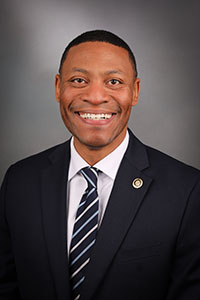
With the decision by current County Executive Sam Page not to seek another term, the race for St. Louis County’s top post has moved from speculation to substance. What is emerging is a contest defined less by ideological warfare and more by experience, temperament, and a collective desire to steady county government after years of turbulence.
Two familiar and well-regarded Democrats are now officially in the field: State Senator Brian Williams, who declared his candidacy early and forcefully, and St. Louis County Assessor Jake Zimmerman, whose entry this week formalizes a race many insiders anticipated.
Brian Williams’ early announcement gave him a head start that matters. By declaring months ahead of the traditional campaign calendar, Williams was able to consolidate support, build infrastructure, and frame the race around stability and forward momentum. That strategy has already yielded results. He has secured endorsements from a cross-section of county elected officials, labor, and segments of the business community, signaling confidence in his ability to govern and unify.
Williams represents University City and portions of North and West St. Louis County in the Missouri Senate, where he has built a reputation as a thoughtful legislator with a firm grasp of both policy detail and constituent service. First elected to the Senate in 2018, he previously served in the Missouri House and has worked extensively in workforce development and public administration. Term-limited in the Senate, the County Executive race offers a natural next chapter for a lawmaker whose career has been marked by coalition-building rather than controversy.

Jake Zimmerman enters the race with a different but equally substantial résumé. He has served as St. Louis County Assessor since 2011, winning multiple countywide elections and overseeing a complex office that directly affects homeowners, municipalities, and school districts. Before becoming assessor, Zimmerman served in the Missouri House of Representatives and worked in state government and legal practice, giving him experience across legislative, executive, and administrative arenas.
Zimmerman is no stranger to the County Executive race. He previously sought the office in 2020, losing in the Democratic primary to Sam Page. This time, the landscape is markedly different. Page’s absence, combined with broad public fatigue over infighting at the county level, creates space for Zimmerman to present himself as a steady hand with deep institutional knowledge and a focus on management rather than drama.
The backdrop to this race cannot be ignored. Sam Page’s decision not to run again comes amid unresolved legal matters stemming from a grand jury indictment related to the use of public funds in a political mailer. While Page has denied wrongdoing, the case and the years-long conflict between the County Executive and County Council have left an imprint on public trust. For many voters, the 2026 election represents less a referendum on ideology and more a reset on governance.
What distinguishes this contest is what it is not. It is not a race dominated by scandal, nor is it driven by sharp personal attacks. Both Williams and Zimmerman are widely viewed as affable, capable, and serious public servants who have spent most of their political lives above controversy. In an era when politics often rewards provocation, that alone sets this race apart.
The choice before Democratic primary voters will likely come down to style and emphasis. Williams offers legislative relationships, a regional vision, and early momentum. Zimmerman offers long-term county experience, operational familiarity, and a message centered on calming the machinery of government. Candidate filing opens later this winter, and additional entrants could still emerge. But with Williams already running strong and Zimmerman now officially in, the contours of the race are clear. St. Louis County voters are being asked a fundamental question: who is best prepared not just to lead, but to restore confidence in a county government that has too often been defined by conflict rather than coordination.
For a county ready to turn the page, the Williams–Zimmerman matchup may be less about rivalry and more about reassurance.

