

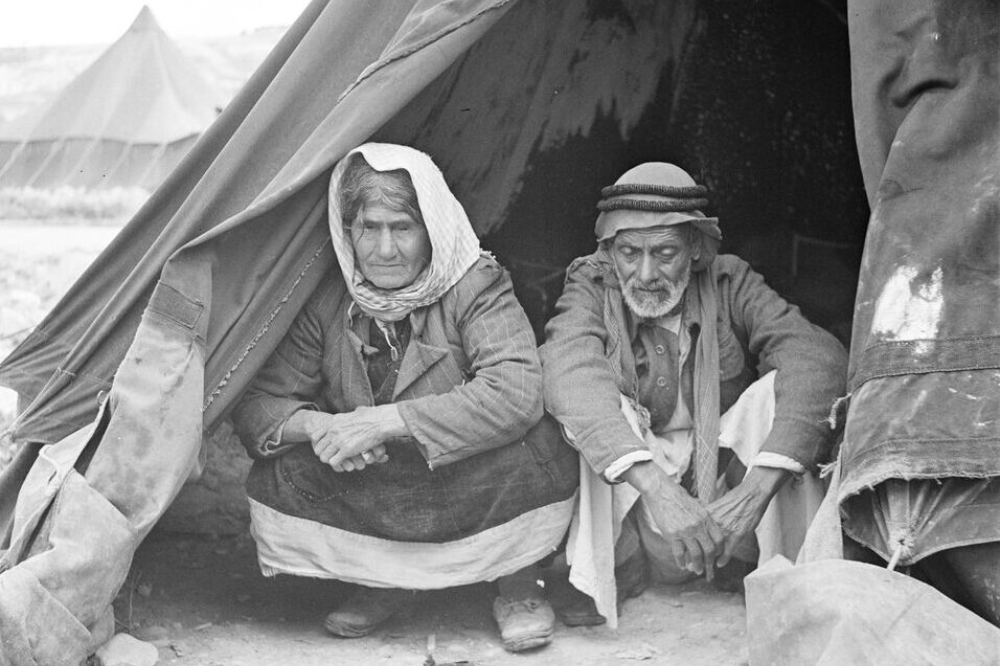
Every year on May 15, Palestinians across the world commemorate the Nakba — the Arabic word for “catastrophe” — marking the mass displacement, dispossession, and destruction that accompanied the establishment of the state of Israel in 1948. What Palestinians remember is not merely a historical event confined to the past, but an ongoing reality that continues to shape the lives of millions.
The Nakba represents one of the defining and horrific tragedies of the modern era. During the founding of Israel in 1948, approximately 750,000 indigenous Palestinians — nearly three-quarters of the Palestinian Arab population — were forcibly expelled or fled from their homes amid war, massacres, and organized campaigns of terror carried out by Zionist militias and the newly formed Israeli army. Hundreds of Palestinian villages and towns were depopulated, destroyed, or repopulated, while survivors became refugees scattered across the Middle East and throughout the global diaspora.
Today, more than seven million Palestinians remain refugees or internally displaced persons, many living in overcrowded camps in Gaza, the West Bank, East Jerusalem, Jordan, Lebanon, Syria, and beyond. Despite international legal recognition of the right of refugees to return to their homes, Palestinians have largely been denied that right for more than seven decades.
The memory of the Nakba remains deeply tied to places like Deir Yassin, the Palestinian village near Jerusalem where more than one hundred civilians — including women, children, and elderly residents — were killed in April 1948 by members of the Irgun and Stern Gang militias. The massacre became symbolic of the terror that spread through Palestinian communities during the war, accelerating mass flight and displacement. Many historians and human rights advocates view these actions as part of a broader campaign aimed at securing a Jewish-majority state through the removal of the indigenous Palestinian population.
The physical landscape of historic Palestine was fundamentally transformed in the aftermath. More than 400 Palestinian villages were erased or absorbed into the expanding Israeli state. Homes, schools, mosques, churches, businesses, and orchards vanished from maps and memory. Families left behind clothing, photographs, books, furniture, and personal belongings, often believing they would soon return. Most never did.
For Palestinians who remained inside the borders of the new Israeli state, life did not bring equality or security. Although granted Israeli citizenship, they lived under military rule from 1949 until 1966, facing restrictions on movement, land ownership, employment, and political expression. Today, Palestinian citizens of Israel continue to report systemic discrimination affecting housing, education, land access, and family unification.
Palestinians and many international observers describe this continuing process as the “Ongoing Nakba.” In East Jerusalem neighborhoods such as Sheikh Jarrah, in Bedouin communities in the Negev (Naqab), throughout the occupied West Bank, and during the devastating destruction witnessed in Gaza since 2023, many Palestinians see a continuation of displacement policies that began in 1948. Expanding settlements, home demolitions, forced evictions, and military occupation have intensified international scrutiny of Israeli policies.
International human rights organizations, including Amnesty International, Human Rights Watch, B’Tselem, and Yesh Din, have issued reports concluding that Israel’s system governing Palestinians constitutes apartheid under international law. These findings have fueled growing debate and activism worldwide.
Across cities in Europe, Africa, Asia, North America, Latin America, and the Middle East, Nakba commemorations have become major international events. Universities, churches, mosques, synagogues, labor unions, student organizations, journalists, academics, and human rights activists increasingly participate in public memorials, educational forums, marches, and cultural exhibitions dedicated to Palestinian history and rights. Demonstrations in cities such as London, Johannesburg, New York City, Chicago, Istanbul, and Cape Town regularly draw thousands carrying Palestinian flags, chanting for ceasefires, human rights protections, and recognition of Palestinian self-determination.
Support for the Palestinian cause has expanded significantly in recent years, particularly among younger generations globally. University campuses have become central sites of organizing, with students calling for divestment from companies connected to occupation policies and military operations. Faith leaders, artists, authors, and public intellectuals have also amplified calls for justice, accountability, and equal human rights for Palestinians and Israelis alike.
For Palestinians, Nakba commemorations are not solely about mourning loss. They are acts of remembrance, resistance, identity, and survival. Keys to homes destroyed generations ago are still preserved by refugee families. Oral histories are passed from grandparents to grandchildren. The names of erased villages continue to be spoken. The Palestinian struggle remains rooted in demands for dignity, freedom, equality, and the right to live without occupation or displacement.
The continuing genocide in Palestine and Israel cannot be understood without understanding the Nakba. For millions around the world, commemorating it is not an act of hatred against a people or religion, but a call to confront historical injustice and pursue a future grounded in human rights, international law, and equal humanity for all who live between the Jordan River and the Mediterranean Sea.

