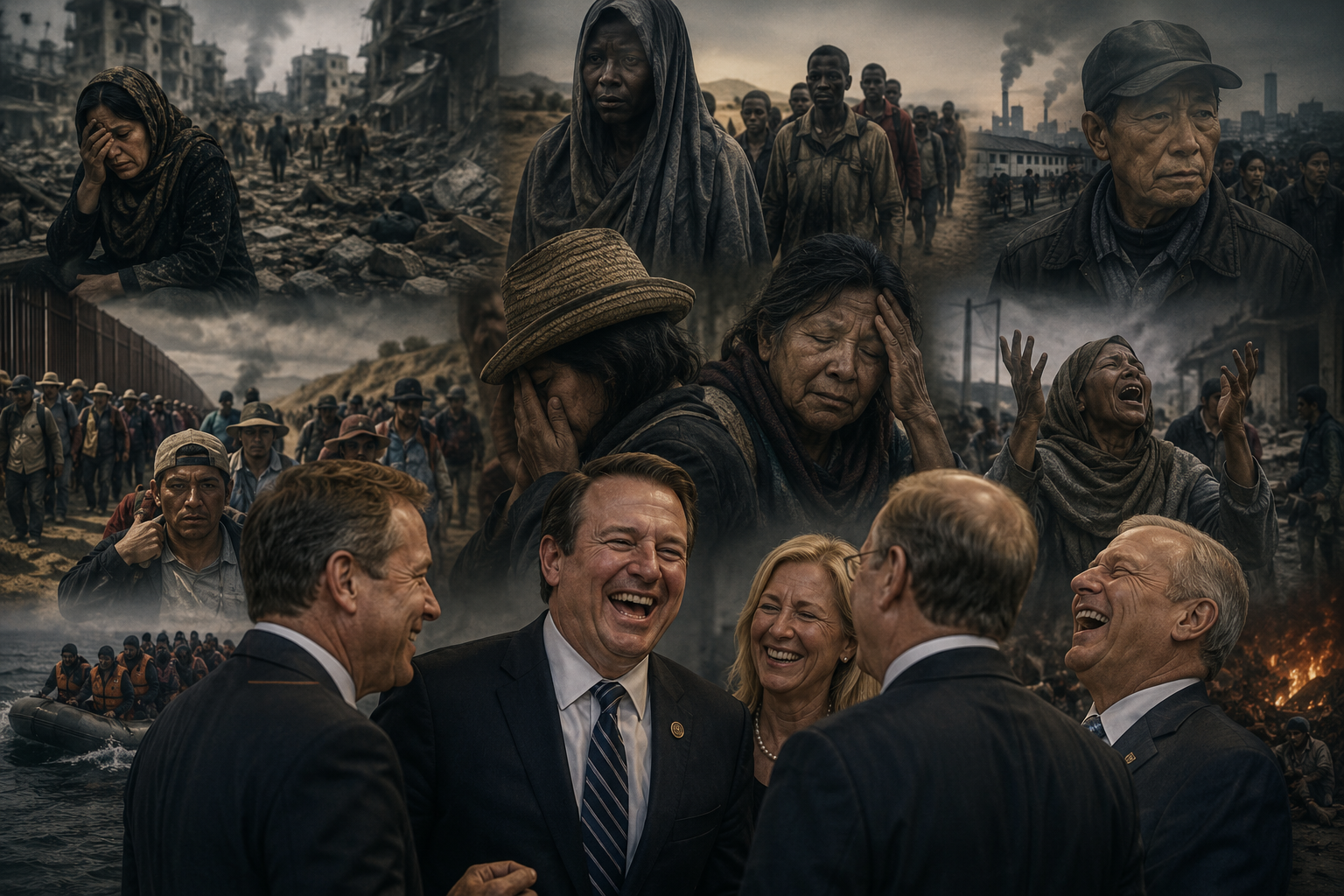

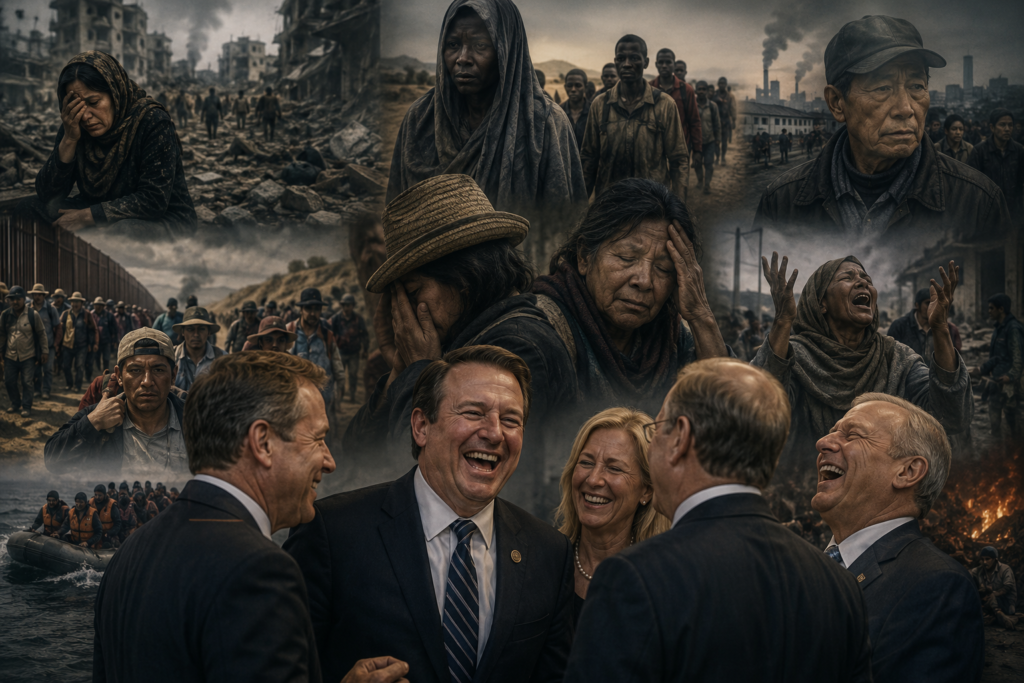
Politics has a way of exposing not only what we believe, but what we are willing to ignore. The most revealing moments are often not found in speeches or campaign promises, but in our response to the suffering of others. Compassion should never be a partisan value. It is a human one.
I’ve heard the argument countless times: “Why are we worried about Palestinian and immigrant children when we have our own children to worry about? We have enough problems right here at home.” It is a convenient way to dismiss another people’s pain, as though empathy were a limited resource. But what can be more local
than the condition of our own hearts? Compassion begins where we stand. If we cannot grieve for innocent lives because they were born under another flag, crossed a border seeking refuge, or worship differently than we do, then we have diminished something essential within ourselves.
Equally troubling is the political reluctance of some leaders to even acknowledge the possibility of genocide. Whether driven by political calculations, campaign donations, alliances, or fear of offending powerful interests, refusing to honestly confront the magnitude of human suffering reflects a deeper moral failure.
When politics dictates whether we can recognize the dehumanization and mass killing of civilians, we should pause and ask what our faith, our conscience, and our humanity truly mean.
I struggle to decide whether it is cowardice, coldness, or simple indifference that troubles me most.
Whatever its source, a person unmoved by the suffering of the human family has surrendered something sacred. A leader unwilling to speak honestly about injustice—wherever it occurs—cannot fully be trusted with the responsibility of representing people whose dignity depends upon moral courage.
History reminds us that silence has often been the companion of injustice. One day, there will be no legislative maneuvering, political polling, or carefully crafted talking points. There will be no political party, no office, no title, and no campaign contribution to shield us from the questions our own conscience must
answer. We will each answer for the moments when we saw suffering and chose convenience over conscience.
My prayer is for every member of our human family living under oppression, violence, displacement, or fear.
I pray for Palestinian families, for immigrant families seeking refuge and safety, and for every people whose humanity has been diminished by war, hatred, prejudice, or indifference. May they find justice, peace, dignity, and freedom. And for those whose political calculations have hardened their hearts, I pray they receive the gift the Tin Man sought all along—a heart capable of feeling the pain of others and the courage to act upon it.
The measure of our humanity is not found in whom we choose to love, but in whether we refuse to look away from suffering simply because it belongs to someone else.
A Reflection from Scripture
Bible
“He defends the cause of the fatherless and the widow, and loves the foreigner residing among you, giving them food and clothing. And you are to love those who are foreigners, for you yourselves were foreigners in Egypt.” — Deuteronomy 10:18–19 (NIV)
Qur’an
“Worship Allah and associate nothing with Him, and be good to parents, relatives, orphans, the needy, the near neighbor, the distant neighbor, the companion at your side, the traveler, and those under your care. Indeed, Allah does not like those who are arrogant and boastful.” — Qur’an 4:36