

Credited to: Rodney Maurice-Editoral Consultant
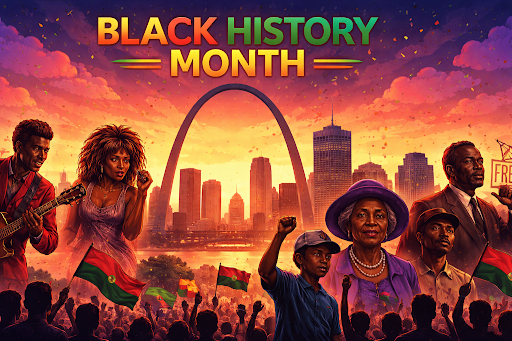
Discover why St. Louis is one of America’s most important Black history cities, from landmark civil rights cases to cultural, musical, and modern activism legacies.
After doing a little digging, it became clear that good old St. Louis is an ideal destination for celebrating Black History Month. As we all know, Sunday, February 1 marks the start of Black History Month, and my hope is that we recognize and honor this time to its fullest. This is a moment to focus on what truly matters to us—our history, our legacy, and our future—while stepping away from distractions that are not our fight or concern.
This month calls on us to remember those who fought tirelessly so we could stand where we are today, free to speak loudly, live boldly, and claim space in a world that once tried to silence us. Their sacrifices laid the foundation for our voices to be heard.
There are countless figures who help explain why St. Louis holds such a powerful place in Black history. While it’s impossible to name them all, a few stand out immediately: Chuck Berry, Tina Turner, Ozzie Smith, Homer G. Phillips, and Annie Malone, just to name a few. Each of these individuals represents excellence, resilience, and influence that reached far beyond city limits.
Now, let’s get to the real reason why polls and historians alike recognize our fair city as a major hub for Black history. St. Louis has been a proving ground—legally, culturally, and socially—where Black Americans shaped music, medicine, business, sports, and civil rights. Its contributions are not footnotes; they are chapters in the American story.
I hope this serves as a lesson to those who are quick to undercut or dismiss my city when it comes to historic Black contributions. St. Louis doesn’t need defending—it needs understanding. The legacy is here, the impact is undeniable, and the history speaks for itself.
When conversations turn to America’s most influential Black history cities, names like Harlem, Atlanta, and Birmingham often dominate the list. Yet St. Louis quietly stands as one of the most pivotal places in African American history—shaping legal precedent, culture, music, activism, and the ongoing fight for civil rights. St. Louis is not just part of Black history; it helped define it.
A City at the Center of American Justice
Few cities can claim the legal significance St. Louis holds in Black history. The infamous Dred Scott v. Sandford case originated at the Old Courthouse downtown, marking a moment that exposed the moral failures of slavery-era America. Nearly a century later, Shelley v. Kraemer, another St. Louis–based case, reached the U.S. Supreme Court and struck down racially restrictive housing covenants nationwide. These cases made St. Louis a battleground where Black citizenship and housing rights were debated at the highest level.
The Ville: A Blueprint for Black Excellence
St. Louis is home to The Ville, one of the most historically significant Black neighborhoods in the United States. During segregation, The Ville became a thriving hub of Black professionals, educators, artists, and entrepreneurs. It produced global icons such as Chuck Berry, Josephine Baker, and Tina Turner. The neighborhood stands as proof that Black communities built success, culture, and opportunity even when excluded from mainstream systems.
A Crossroads of the Great Migration
Situated along the Mississippi River, St. Louis became a critical destination during the Great Migration. Black families arriving from the South brought traditions, faith, and music that shaped the city’s cultural DNA. Blues, jazz, gospel, and later hip-hop flourished here, influencing American music far beyond Missouri. St. Louis’s sound became a national soundtrack of resilience and reinvention.
Journalism, Faith, and Political Organizing
Black churches, newspapers, and community organizations have long played a central role in St. Louis life. These institutions educated voters, challenged segregation, and fostered leadership. From early 20th-century labor organizing to modern political movements, St. Louis has consistently been a city where Black voices organized for power and progress.
Ferguson and the Modern Civil Rights Era
In the 21st century, St. Louis again entered the national spotlight following the events in nearby Ferguson. Protests demanding accountability, justice, and systemic reform reignited global conversations about policing and race. This modern chapter reinforces St. Louis’s ongoing role as a catalyst for civil rights dialogue—connecting past struggles to present realities.
Why St. Louis Matters for Future Generations
St. Louis teaches an essential lesson: Black history is not confined to one era or region. It is legal, cultural, spiritual, and ongoing. For future generations, St. Louis offers a living classroom—one that shows how courage, creativity, and community can reshape America, even in the face of resistance.
The Legacy Continues
To understand Black history in America, one must understand St. Louis. Its streets tell stories of injustice challenged, talent nurtured, and movements born. St. Louis is not just a witness to Black history—it is one of its architects.
In conclusion, let me add, we are a foodie city and let’s see if Yelp or any other food critic talk about our black culinary talents.
Here are some of the top well-known Black-owned or Black-celebrated restaurants in St. Louis, Missouri—great spots to support local culture and enjoy amazing food:
🍽️ Must-Try Black-Owned Restaurants in St. Louis
1. The Fattened Caf. – A highly rated local favorite known for flavorful comfort food and a welcoming vibe.
2. Who Dat Southern Food Bar and Grill – Southern classics done right—with dishes that celebrate soul food traditions rooted in Black culture.
3. 4 Hens Creole Kitchen – Creole-inspired cuisine with rich flavors and a loyal following.
4. Blk Mkt Eats – A fresh, locally loved concept offering globally inspired bowls and burrito-style rolls.
5. Jaden’s Diner – A beloved community diner serving classic comfort fare.
6. Levels Nigerian Cuisine – Authentic Nigerian dishes with a modern touch—an excellent spot for West African cuisine downtown.
7. FUFU n’ Sauce – West African food that’s as much cultural storytelling as it is delicious, started by a chef passionate about heritage.
8. Soul 2 Soul – A soul food lounge and dining space blending food with community vibes.
9. Mom’s Soul Food Kitchen & Catering – Classic soul food dishes and homestyle cooking that draw locals and visitors alike.
10. Creole With A Splash Of Soul – Creole and soul fusion with bold flavors in a cozy setting.
11. Your Place Diner – A community diner with great reviews and soulful comfort dishes.
🍴 Why These Spots Matter
St. Louis’s Black-owned restaurants reflect the city’s rich cultural tapestry and culinary heritage, blending Southern soul, Creole spice, West African tradition, and innovative modern cuisine. Supporting these local businesses helps sustain vibrant community spaces, celebrate Black entrepreneurship, and share flavorful history one plate at a time.
Courtesy of Yelp; please note this list may have been updated recently and may not reflect current information. Always call ahead to be sure of reservations, menu change or management changes.
#BlackHistoryMonth #StLouis #BlackHistory #BlackExcellence #STLPride #TheVilleSTL #KnowYourHistory

