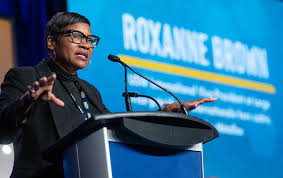

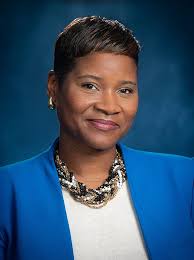
The United Steelworkers (USW), North America’s largest industrial labor union, is poised to enter a historic new chapter. On March 1, 2026, Roxanne Brown will become the organization’s international president, marking the first time in its 80-plus-year history that a woman — and specifically a Black woman — will lead the union’s 850,000 members. Brown’s leadership arrives at a critical and uncertain moment for organized labor, as major contract fights and a volatile economy place unprecedented demands on workers and their representatives.
Born in Kingston, Jamaica, and raised in White Plains, New York, Brown has spent her career expanding USW’s reach beyond its traditional base of steel, paper, and manufacturing workers into healthcare, education, and service industries. Today, roughly 50,000 healthcare workers, along with thousands of public-sector and university employees, wear the Steelworkers’ emblem. While the union is still predominantly white and male, Brown has helped build a more diverse and expansive membership, uniting workers whose industries and demographics look very different from the steel mills of decades past.
Her presidency will begin just as the union faces a wave of major contract negotiations — from oil and petrochemical refineries in January, to aluminum workers in the spring, to tire and rubber workers in midsummer. Economic unpredictability makes these bargaining sessions even more complex. Brown insists the union must not only secure fair wages and benefits but also help members understand how political decisions affect their jobs, healthcare, and retirement security.
For her, strengthening the union means deepening education at every level. She underscores the importance of member-focused learning programs — like Women of Steel, Next Gen, and the union’s civil and human rights initiatives — to build awareness around policy threats to bargaining rights, workplace safety, and workers’ compensation. Brown believes informed workers make empowered voters, and that unions must help them recognize who truly protects their interests.
Looking ahead, she emphasizes a proactive stance in public policy. Whether under Republican or Democratic administrations, Brown maintains that unions must remain at the table, defending the right to organize and pushing back against legislation that undermines collective bargaining. “If you’re not at the table, you’re on the menu,” she says — a fitting motto for a leader ready to steer labor into a new and transformative era.