

Credited to: TD El-Amin, Publisher
One of Missouri’s top Democratic political rivalries is about to enter another chapter. Only this time, Democrats in Missouri’s First Congressional District are facing a question that could completely change the calculus of who wins: support for Israel and War in Iran.
Former Congresswoman Cori Bush lost her seat in 2024 to challenger Wesley Bell in one of the most expensive House races in modern history. Bell overcame Bush by about 5% in Missouri’s Democratic primary for 1st District Representative, taking in about 51% of the vote compared to Bush’s 46%.

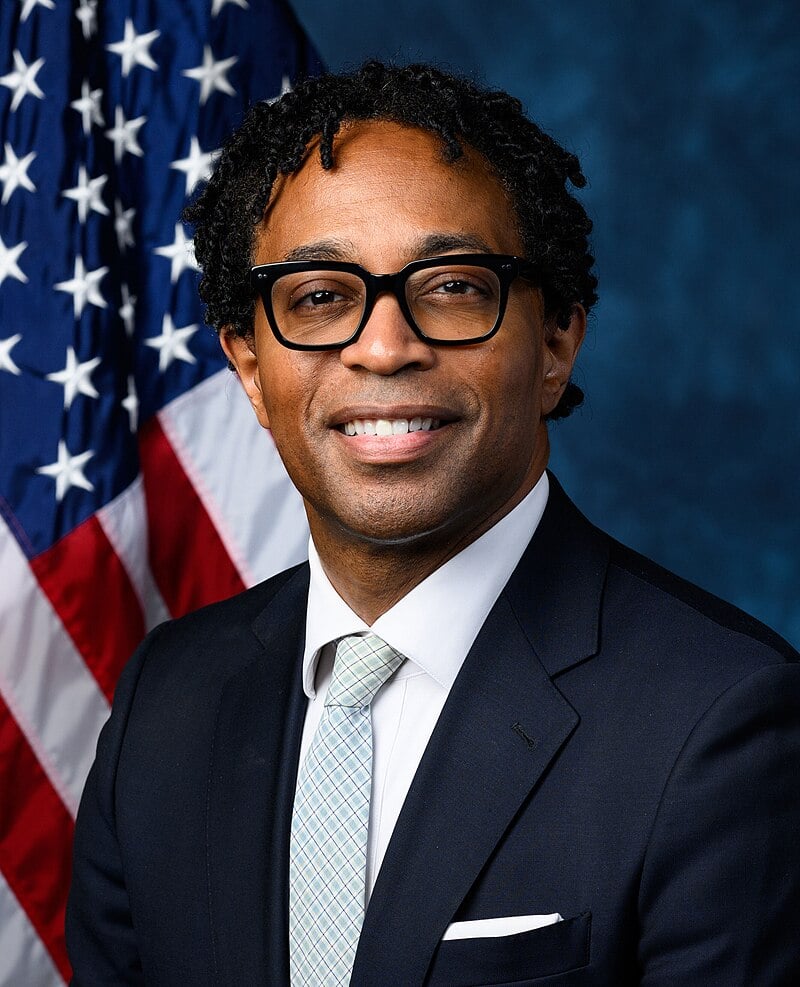
Outside spending on that race broke records, thanks to involvement from the American Israel Public Affairs Committee (AIPAC) and its sister PAC United Democracy Project (UDP). Pro-Israel groups spent upwards of $8–9 million attacking Bush and supporting Bell.
Bell outraised Bush during the campaign cycle as well, bringing in nearly $4.8 million to Bush’s $2.9 million.
Bush—who was a member of the progressive “Squad”, a group of progressive House members that originally included Jamaal Bowman, Ayanna Presley, Ilhan Omar, Alexandria Ocasio-Cortez, Rashida Tlaib, Greg Casar, Summer Lee, and Delia Ramirez. Bush had emerged as one of the first members of Congress to call for a ceasefire in Gaza as well as criticize Israeli military action. Pro-Israel political groups like AIPAC moved aggressively to defeat candidates like Bush, who they felt were crossing a “red line” on Israel.
In Missouri, it had an impact. Bell ousted Bush after just one term in Congress.
Fast forward to today. The political landscape looks slightly different from what it did two years ago.
American public opinion on Israel has sunk to historic lows amid the war in Gaza and growing regional instability. Conflict with Iran is escalating and raising fears of a broader Middle East war. American voters are taking notice—and they’re not happy about how much taxpayers are being asked to fund overseas conflicts.
Support for Israel is becoming a political liability for elected officials on both sides of the aisle. The progressive left decries civilian deaths in Gaza. The populist right frames Israel as another opportunity for foreign military adventurism that doesn’t put “America First.”
The net result is a rare form of bipartisanship: voters are getting tired of war.
Could that change Missouri’s First District result?
Typically, money and incumbency win elections. Bell has both: He currently represents Missouri’s First District and still has the name recognition and fundraising infrastructure that comes with holding office.
But something that gave Bell the edge in 2024 could end up hurting his chances in 2026: Big money from pro-Israel groups.
Democrats across the country—Bush included—have begun attacking AIPAC for spending millions in Democratic primaries to influence who the party nominates. The group, which has spent over half a billion dollars on congressional elections since 2018, frequently targets progressive Democrats who vote against Israel.
In reaction, voters are starting to hold their elected officials accountable.
Incumbent Democrats in Oklahoma and Colorado recently faced primary challenges from progressive candidates who attacked their Israel funding records and won. In New York, Democrat Pat Ryan beat back a primary challenge in part by distancing himself from pro-Israel groups that had previously supported him. Recently, the electoral success of Democratic Socialist, and now New York Mayor Zohran Mamdani, has also given signs of the changing tides and sentiments of poll success running against the influence of AIPAC-funded candidates and campaigns.
Stay tuned for round two in St. Louis.
In Bell v Bush II, Democrats in Missouri’s 1st Congressional contest, the central question of AIPAC’s influence will be answered as it wasin Colorado, Oklahoma, and New York. This will be the impetus for recalculating and assessing the influence of the current state of war and funding of interests outside of the American population, and that which is not directly aligned with domestic bread and butter issues.
Expect Bush to make Israel funding and pieces regarding war a centerpiece of her campaign against Bell. In fact, you can bet she’ll try to tie Bell to Republican-funded war money as well.
Bell will assert his defense, of course. Israel is a long-time ally of the United States, and Democratic voters will need to decide if that matters.
But as Democrats assess the political landscape over the next year, one thing will become clear: you can’t run from the political winds. If voters continue to sour on funding overseas conflicts, all that past fundraising will do is serve as a reminder of where Bell’s loyalties lie.
And that could be enough to make this race one of the hottest, most hotly contested, and watched nailbiters in the country.

