

Bob Law Dies: “Night Talk” Radio Pioneer Who Shaped Black Political Consciousness Passes
Credited to: Argus Staff
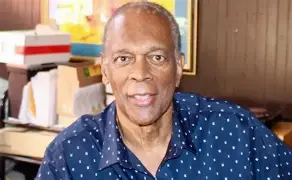
The night feels different now.
For decades, when the sun dipped below the skyline and the world grew quiet, there was one voice that refused to sleep. That voice belonged to Bob Law—steady, uncompromising, and deeply rooted in the struggle and spirit of Black America. Now that voice is gone, and with it, an era.
Bob Law, the architect behind Night Talk, has died following ongoing health challenges, according to friends and family. His passing marks the loss of one of the most influential figures in Black radio and media.
He was not simply a radio host. He was a builder of consciousness.
Long before podcasts, streaming platforms, or social media democratized access to audiences, Law transformed late-night radio into a national gathering place. When Night Talk went national in 1981 through the National Black Network, it became the first live nationally broadcast Black radio talk show in the country.
It was more than a show—it was a bridge.
From Harlem to Houston, from Washington, D.C. to Detroit, listeners tuned in not just to hear, but to engage. They debated, organized, and mobilized. Law created a space where ideas turned into action and where Black voices shaped their own narrative.
His journey into media was forged in the Civil Rights Movement. As a field secretary with the Student Nonviolent Coordinating Committee, Law carried that same urgency and discipline into broadcasting. He often said his career in radio was born out of that movement—and it showed.
One of his most significant contributions came in 1984, when Night Talk became a launching ground for Rev. Jesse Jackson’s presidential campaign. Through weekly conversations on air, the rallying cry “Run Jesse Run” spread across the country, turning grassroots energy into a national political force.
But Law’s impact extended beyond politics.
At its core, Night Talk built community. It connected Black Americans across geographic boundaries and demonstrated the power of collective action. From fundraising efforts to national organizing campaigns, listeners became participants in a shared mission.
Rev. Al Sharpton, who credited Law with helping shape his early career, described Night Talk as the political grapevine of Black America. In many ways, it was more than that—it was infrastructure for a people seeking voice, direction, and unity.
Throughout his more than 50-year career, Law remained outspoken about the state of Black media. He challenged its direction, urging it to remain grounded in purpose rather than profit. He understood that media could either empower communities or dilute them—and he chose empowerment.
He gave platforms to emerging leaders, elevated critical issues, and insisted that Black radio remain accountable to the communities it served.
Bob Law is preceded in death by his wife, Muntu. He leaves behind a legacy that continues to resonate across generations of broadcasters, activists, and listeners.
The night may be quieter now.
But the work he inspired—and the consciousness he helped build—remains.

