
By Talibdin El-Amin
In politics and diplomacy, outcomes matter more than slogans. A decade ago, critics of the 2015 Joint Comprehensive Plan of Action (JCPOA) argued that the Obama administration had capitulated to Tehran. Yet, by its central objective, the agreement prevented direct military conflict between the United States and Iran while placing internationally monitored restrictions on Iran’s nuclear program and preserving broad international support.
The current memorandum of understanding with Iran emerges from a dramatically different context. It follows military confrontation and growing questions about America’s global standing, alliance management, and strategic leverage. Critics argue that the present arrangement has come at a far greater geopolitical cost than the JCPOA ever did.
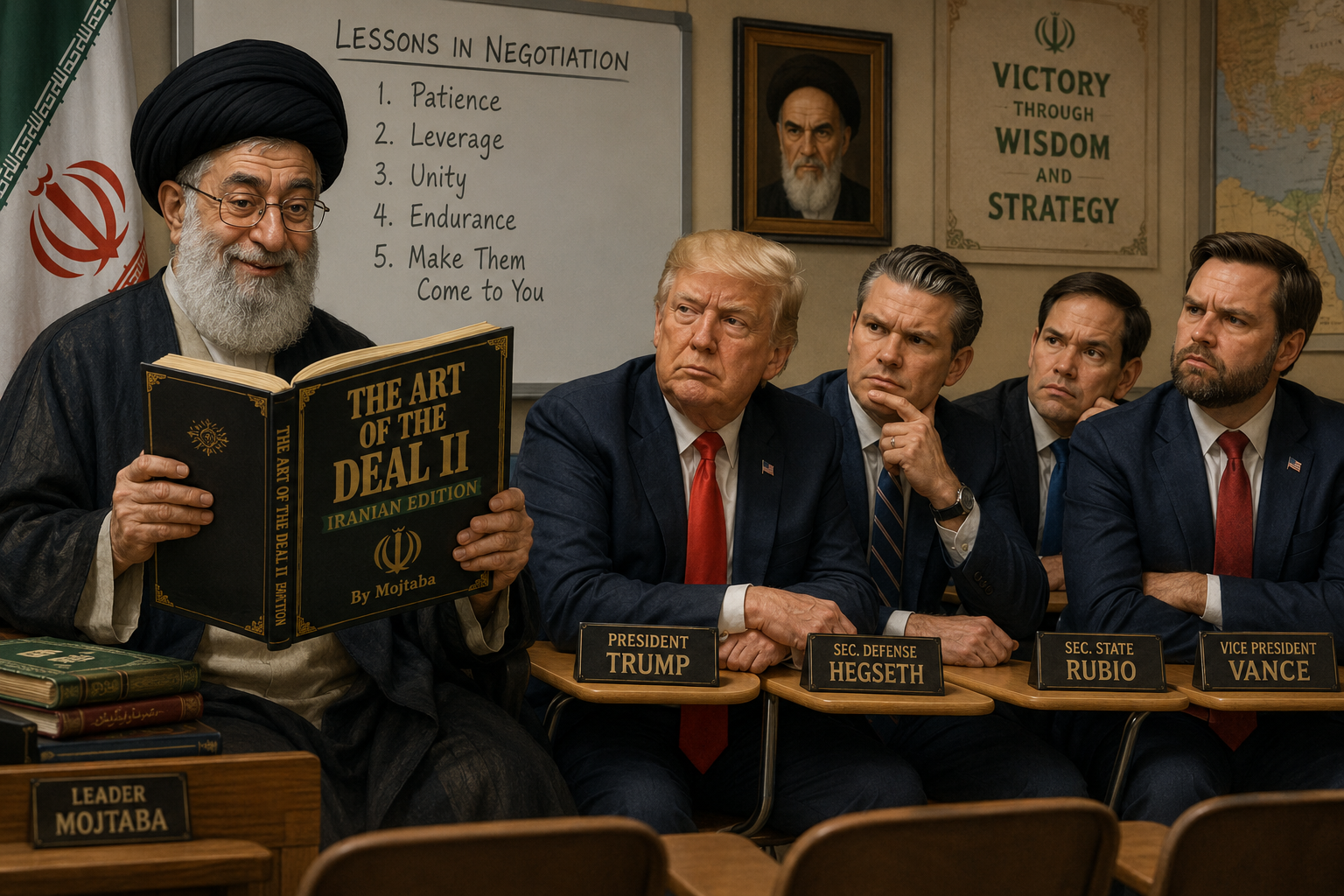
The irony is difficult to ignore. The administration that condemned the JCPOA as weakness now finds itself negotiating with Tehran after conflict that has raised concerns about diminished American credibility and increased regional instability. Some observers suggest that Iran has demonstrated remarkable strategic patience and resilience.
The JCPOA was a multilateral agreement involving the United States, Iran, Britain, France, Germany, Russia, China, and international inspection mechanisms. The current arrangement has unfolded amid public disagreements between President Donald Trump and Israeli Prime Minister Benjamin Netanyahu regarding its durability and whether aspects of the agreement are binding.
If Israel reserves the right to act unilaterally and does not view itself as bound by the arrangement, what exactly has been achieved? If unilateral military action occurs contrary to Washington’s understanding, what recourse does the United States possess? Should future aid and strategic commitments be reassessed? These are matters of national interest.
Perhaps the greatest casualty of the current conflict is credibility. America’s influence has historically depended not simply upon military strength but also upon legitimacy, trust, and coalition-building. The conflict with Iran has raised concerns throughout parts of the Muslim world and among international partners regarding consistency and long-term strategic direction.
The debate is intensified by Section 224 of the House version of the Fiscal Year 2027 National Defense Authorization Act, introduced by House Armed Services Committee Chairman Mike Rogers and Ranking Member Adam Smith. The proposal would deepen U.S.-Israeli defense technology cooperation and expand integration in areas such as artificial intelligence, cybersecurity, counter-drone technologies, and missile defense capabilities.
The comparison between the JCPOA and the present arrangement is ultimately an exercise in accountability. One agreement was criticized for avoiding war; the other emerged after war. One maintained broad international consensus; the other arrives amid fractured alliances and public disagreements.
History often has a sense of irony. In international politics, victory is not determined solely by military capability but by endurance, legitimacy, and an ability to negotiate from positions of strength and trust.