
In the Absence of Community Economic Safeguards, Who Really Benefits From Neighborhood Investment?
Growing frustration over the apparent lack of African-American workforce representation on neighborhood construction projects raises larger questions about institutional accountability, economic inclusion, and the responsibilities of corporations operating in historically underserved communities.
ST. LOUIS, MO — October 27, 2026
There is a growing sense of frustration in North St. Louis, where residents and community stakeholders are raising an increasingly uncomfortable question: How committed are the institutions that operate in our neighborhoods to the economic well-being of the people who actually live there?
The question is neither new nor unreasonable. For generations, predominantly African-American neighborhoods have experienced economic disinvestment, declining property values, limited access to capital, and persistent barriers to business ownership and employment.
Yet, when institutions undertake construction, renovations, or other capital improvements within these same communities, residents are too often left wondering whether the economic benefits of those investments will reach their neighborhoods.
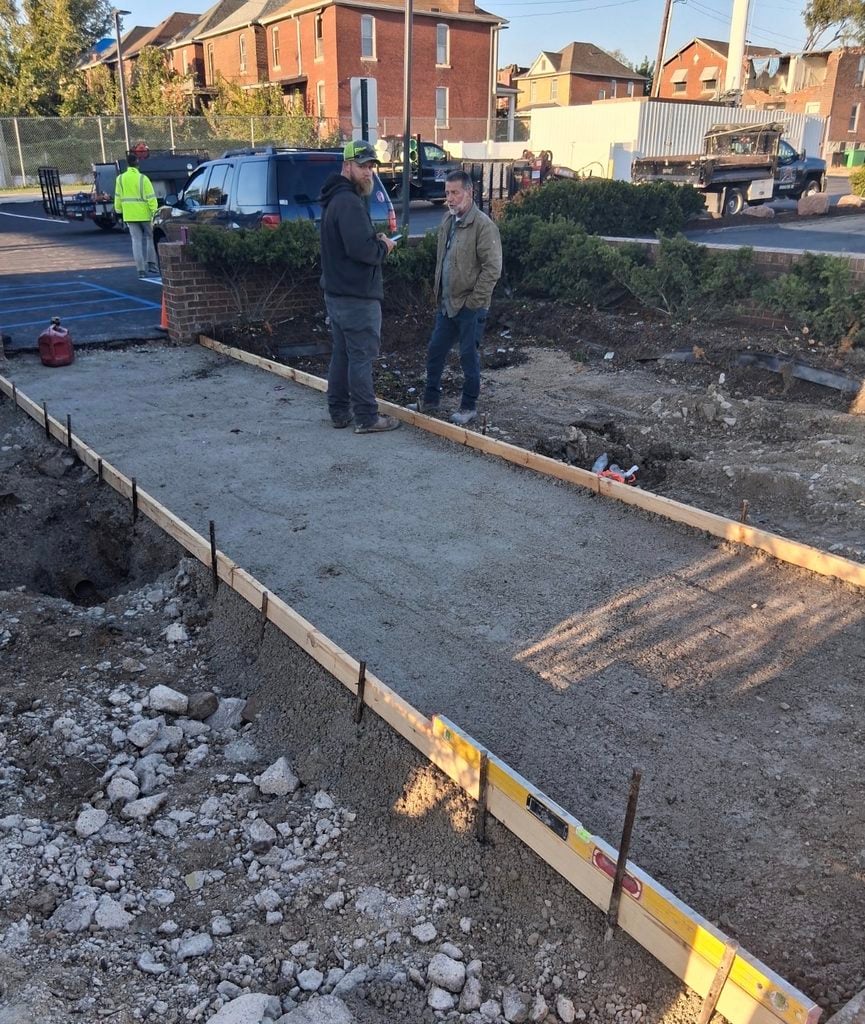
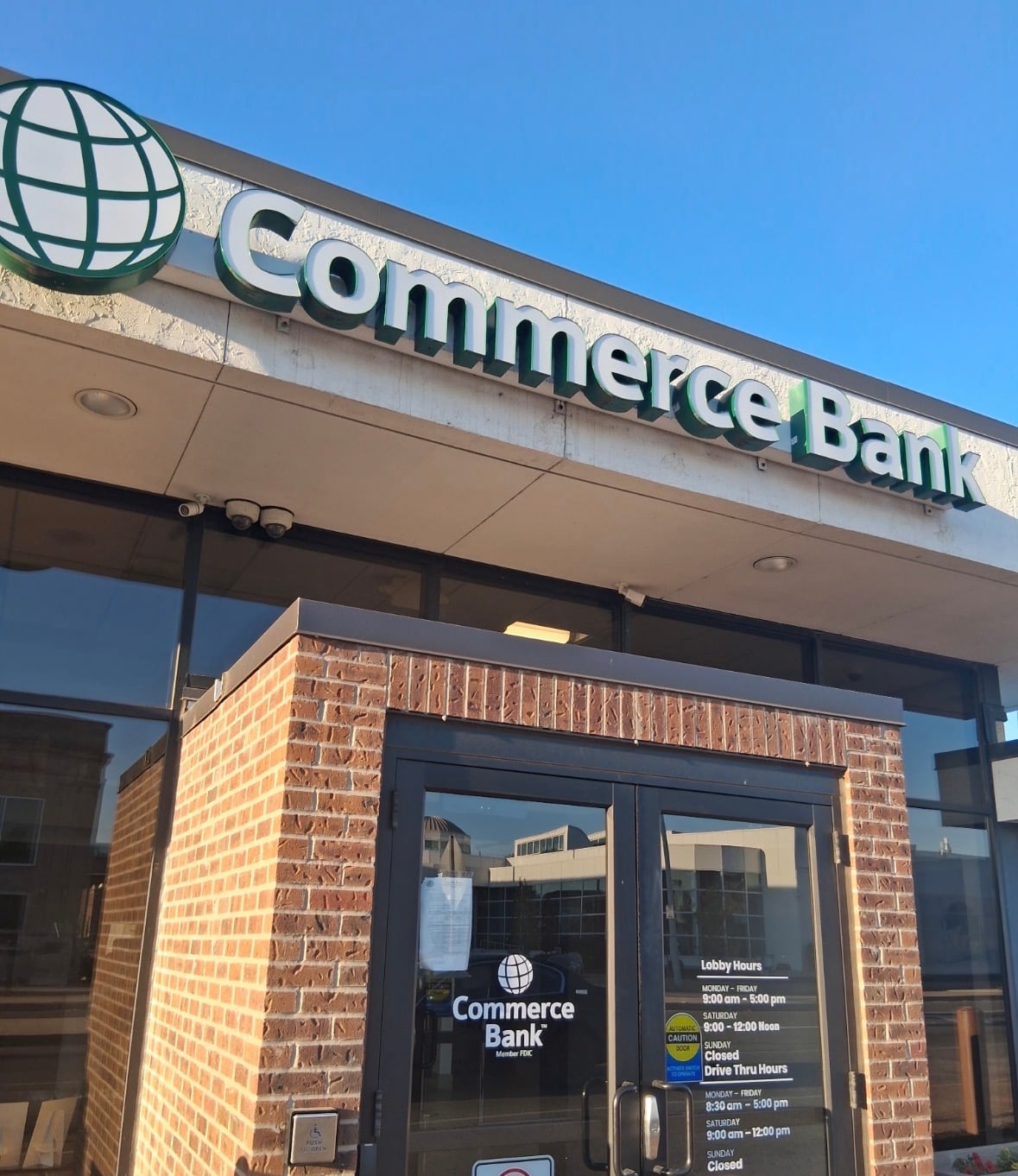
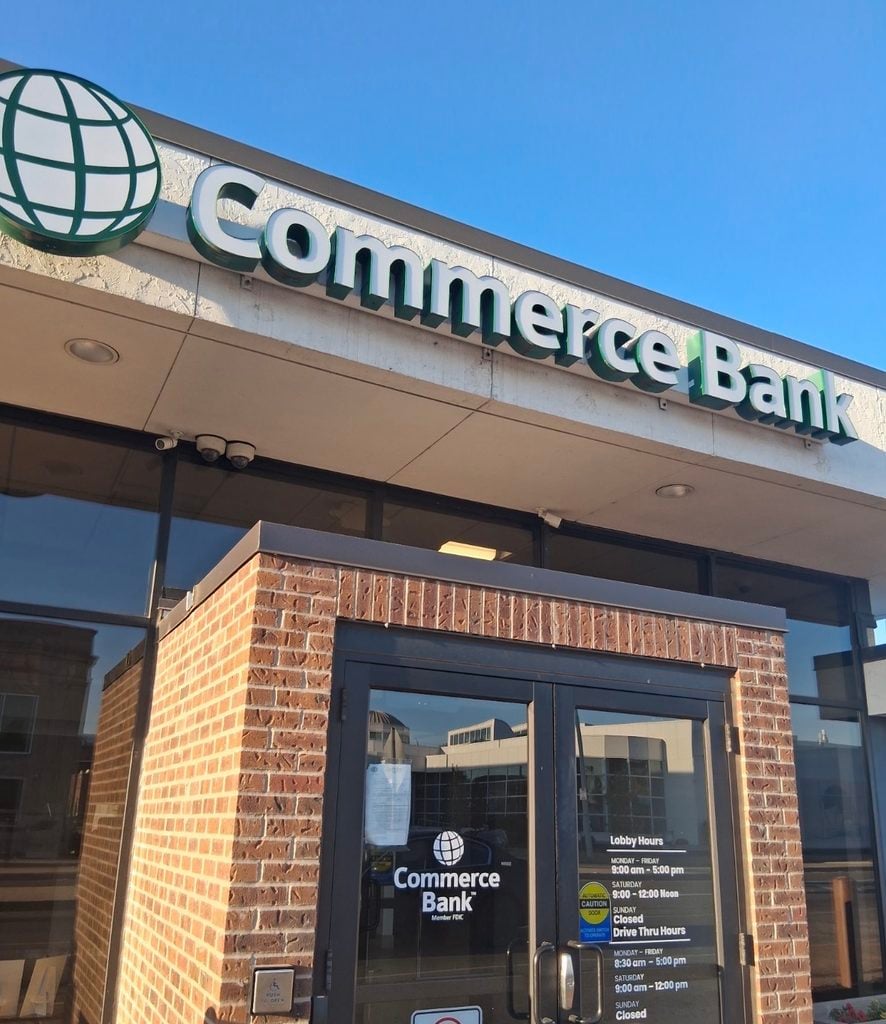
Recent concerns surrounding construction-related activities associated with Commerce Bank’s Natural Bridge location near Newstead Avenue have brought these longstanding frustrations into renewed focus.
Community stakeholders have raised questions about what they perceive as a lack of visible African-American representation among workers and contractors participating in neighborhood improvement projects.
Their concerns extend beyond the simple observation of who appears to be working at a construction site. They speak to a deeper frustration about economic access, institutional transparency, and whether corporations benefiting from longstanding relationships with African-American communities are providing meaningful opportunities for those communities to participate in their investments.
The concern is not simply that construction is taking place. It is whether community residents and businesses are being given a meaningful opportunity to benefit from it.
Economic Investment Without Economic Inclusion
Construction projects represent more than improvements to buildings. They create employment opportunities, generate business revenue, support skilled trades, and provide opportunities for contractors and subcontractors to expand their operations.
For economically distressed neighborhoods, these opportunities can have consequences extending well beyond the immediate project.
A construction contract awarded to a neighborhood-based business can help sustain jobs, purchase equipment, train apprentices, and circulate dollars within the surrounding community.
Conversely, when projects are completed without meaningful opportunities for local participation, residents may see improved buildings while experiencing little improvement in their own economic circumstances.
This is precisely the type of disconnect that fuels community frustration.
It also raises questions about the absence of clearly defined community economic safeguards—mechanisms that encourage institutions to communicate contracting opportunities, recruit qualified local workers, provide transparent selection processes, and demonstrate measurable community benefits.
Not every private construction project is subject to legally mandated minority participation requirements. Nevertheless, the absence of a legal obligation does not eliminate the broader question of corporate responsibility.
A corporation’s commitment to a community should not begin and end with its physical presence in that community.
Commerce Bank and the Questions Residents Are Raising
Commerce Bank has maintained a significant presence in the St. Louis financial marketplace, including North St. Louis.
In fact, the institution publicly recommitted to the Natural Bridge corridor in December 2016 when it announced a new banking facility, describing that investment as part of its commitment to serving the surrounding neighborhood.
More recently, Commerce Bank has promoted initiatives intended to strengthen community development, expand banking access, and engage local and diverse suppliers.
Its published Supplier Engagement program states that it seeks relationships with local, small, and certified diverse enterprises.
These are important commitments and deserve acknowledgment.
However, community stakeholders are entitled to ask how such policies translate into actual contracting opportunities, workforce participation, and neighborhood economic development.
Regarding the construction-related activity now drawing attention near Natural Bridge and Newstead, questions remain about the nature of the work, the selection of contractors, and the extent to which African-American-owned and neighborhood-based businesses were considered.
At present, the St. Louis Argus has not independently established the racial composition of the project’s workforce, the ownership of participating contractors, or the procedures used to award contracts.
Nor has the publication established that Commerce Bank has violated any law, policy, or contractual obligation.
Nevertheless, the lack of publicly available, project-specific answers can contribute to a perception of exclusion—even when an institution maintains broader policies supporting economic inclusion.
That distinction is important.
Perception should not be presented as proof. But neither should legitimate questions from community residents be dismissed merely because answers have not yet been provided.
Growing Frustration and the Possibility of Public Demonstrations
The concerns surrounding construction activity have reportedly generated discussions about potential organized community demonstrations.
Among those identified in information provided to the Argus is longtime St. Louis community activist Anthony Shahid, whose name has surfaced in connection with inquiries surrounding the project and possible public action.
The Argus has requested an opportunity to speak with Shahid directly. His specific position, the extent of his involvement, and any plans for demonstrations have not yet been independently confirmed.
Still, the possibility of organized public opposition illustrates the larger problem facing institutions in communities where longstanding economic inequalities remain unresolved.
For many residents, the frustration is cumulative.
It reflects years of watching financial institutions, developers, major employers, and other corporations conduct business in predominantly African-American neighborhoods without residents always being able to identify corresponding gains in local hiring, business ownership, or wealth creation.
Whether those perceptions accurately reflect the practices of any particular institution must be determined through evidence.
But the broader frustration deserves attention.
Communities should not have to threaten demonstrations simply to obtain information about economic opportunities connected to investments taking place in their own neighborhoods.
Banking Relationships Must Mean More Than Deposits and Transactions
The banking industry occupies a particularly important position in discussions about neighborhood economic development.
Unlike many other businesses, banks play a central role in determining access to capital, financing business expansion, supporting homeownership, and facilitating community reinvestment.
The federal Community Reinvestment Act was established to encourage federally insured banks to help meet the credit needs of the communities they serve, including low- and moderate-income neighborhoods, consistent with safe and sound banking practices.
However, Community Reinvestment Act responsibilities do not automatically establish local workforce or minority-contractor requirements for every privately financed bank construction project.
That distinction makes voluntary corporate commitments and public accountability even more important.
Commerce Bank has identified community development and financial inclusion as components of its corporate responsibility initiatives.
The question now is how those commitments are experienced at the neighborhood level.
How many African-American entrepreneurs in North St. Louis have obtained financing through targeted small-business initiatives?
How many neighborhood-based contractors have received opportunities to compete for institutional projects?
What efforts are being made to connect local residents with careers in construction, banking, financial services, and related industries?
What measurable outcomes can be identified in communities that have experienced decades of disinvestment?
These questions are not accusations.
They are reasonable measures of institutional commitment.
The Missing Safeguard: Community Economic Accountability
One of the greatest weaknesses in neighborhood redevelopment is the absence of consistent structures requiring meaningful dialogue between institutions and the communities affected by their investments.
Frequently, decisions about construction, procurement, and development are made without visible engagement with neighborhood associations, community-based organizations, or local business networks.
By the time residents become aware of a project, contracts may already have been awarded and employment opportunities filled.
This approach creates a predictable cycle.
Institutions announce investments. Residents observe construction. Questions emerge about who received the contracts and jobs. Corporate representatives point to broader community commitments. Yet project-specific information often remains difficult for the public to evaluate.
A more constructive approach would establish community economic safeguards before major projects begin.
These safeguards could include advance notice of contracting opportunities, accessible procurement information, outreach to qualified neighborhood businesses, voluntary local hiring goals, apprenticeship partnerships, and public reporting of community participation.
Such measures need not compromise competitive bidding, professional qualifications, or construction standards.
Instead, they would help ensure that qualified businesses and workers are aware of opportunities and have a fair chance to compete.
Importantly, meaningful inclusion does not mean awarding contracts to unqualified businesses.
It means removing unnecessary barriers that prevent qualified businesses from competing in the first place.
Economic inclusion is not a demand for preferential treatment. It is a demand that opportunity be visible, accessible, and fairly distributed.
Corporate Citizenship Must Be Measurable
Commerce Bank is not alone in facing these questions.
Hospitals, universities, utilities, developers, financial institutions, and other major organizations operating in predominantly African-American neighborhoods should be prepared to explain how their economic activities benefit the communities surrounding them.
Community engagement cannot be reduced to occasional sponsorships, charitable donations, ceremonial appearances, or statements of corporate goodwill.
Those activities may have value, but they are not substitutes for meaningful economic participation.
Residents should be able to distinguish between philanthropy and genuine neighborhood economic development.
The first provides assistance.
The second creates opportunities for ownership, employment, financial stability, and long-term wealth.
Both are important, but they are not interchangeable.
For financial institutions especially, corporate citizenship should be reflected in accessible lending programs, transparent procurement opportunities, neighborhood partnerships, and the demonstrated ability of residents and businesses to participate in the local economy.
An Opportunity for Commerce Bank to Respond
The St. Louis Argus believes Commerce Bank should be afforded a full and fair opportunity to address the concerns being raised.
The publication is seeking information regarding the Natural Bridge construction activity, contractor selection procedures, local business participation, workforce opportunities, community reinvestment initiatives, and the institution’s broader relationship with African-American neighborhoods.
A constructive response could include project-specific contracting information, an explanation of existing supplier engagement programs, examples of measurable investments in North St. Louis, and an opportunity for direct dialogue with concerned residents.
A community information session could also provide a productive forum for addressing questions before frustration escalates into confrontation.
Such engagement would benefit everyone involved.
Residents would gain greater clarity about opportunities and institutional practices. Commerce Bank would have an opportunity to demonstrate its commitments through verifiable information. Local contractors and entrepreneurs could learn how to access future procurement opportunities.
Most importantly, dialogue could establish a framework for greater economic participation moving forward.
The Bigger Question: Who Benefits When Our Communities Grow?
Ultimately, the concerns surrounding Commerce Bank’s Natural Bridge location represent a much larger issue confronting African-American neighborhoods across St. Louis and beyond.
What does community investment truly mean when residents cannot readily identify their participation in the economic activity taking place around them?
A renovated building may improve the appearance of a commercial corridor.
A new branch may enhance access to financial services.
A corporate announcement may generate favorable publicity.
But the ultimate measure of community economic progress must include whether local residents are gaining employment, whether neighborhood businesses are obtaining contracts, whether entrepreneurs can access capital, and whether wealth is being created and retained within the community.
The institutions operating in North St. Louis should welcome these questions rather than regard them as adversarial.
Accountability and partnership are not opposing principles.
They are essential components of lasting community trust.
And for residents who have witnessed generations of economic disinvestment, promises of commitment must eventually be accompanied by evidence of results.
The question is no longer simply whether institutions are willing to invest in our neighborhoods.
The question is whether they are equally committed to investing in the people who call those neighborhoods home.
Until that question receives clear and measurable answers, the frustration surrounding economic exclusion is unlikely to disappear.
And perhaps it should not.
Because a community that demands meaningful participation in its own economic future is not asking for charity.
It is demanding the opportunity to prosper.
ARGUS OPINION | St. Louis Argus
The St. Louis Argus welcomes responses from Commerce Bank representatives, neighborhood residents, contractors, small-business owners, and community stakeholders concerning economic participation, institutional accountability, and neighborhood investment. The publication will continue seeking additional perspectives and verified information regarding the concerns discussed in this commentary.