

Why Tuskegee’s dress code became a cultural indictment while Penn State’s alleged cocaine ring remained a criminal case involving individuals
By Talibdin “TD” El-Amin
Tuskegee University’s decision to prohibit bonnets, durags, bedroom shoes and revealing clothing in classrooms, dining facilities and certain official settings ignited a national debate over professionalism, personal freedom and the policing of Black cultural expression.
University President Dr. Mark A. Brown presented the policy as preparation for the professional world. Students were instructed to arrive on campus with a business suit and appropriate shoes available for business meetings. Faculty members were also authorized to respond when students were considered inappropriately dressed.
Whether one agrees or disagrees with the policy, Tuskegee has the right—and responsibility—to establish standards for its students. Historically Black colleges and universities have long viewed themselves as places where academic preparation, personal discipline and professional development are inseparable.
But the policy also raises legitimate concerns. Bonnets and durags are not merely fashion accessories; they serve practical purposes in protecting Black hair. Prohibiting them across ordinary campus spaces can suggest that cultural expressions associated with Black students are inherently unprofessional.
The larger issue, however, is not simply Tuskegee’s policy. It is how quickly the policy became a national referendum on Black behavior.
Headlines repeatedly emphasized bonnets, durags and “controversial” attire. Social media debates descended into familiar arguments about whether young Black people dress “ghetto,” lack discipline or fail to present themselves properly. Tuskegee students were collectively pulled into a public morality play about respectability—even though no crime had been committed.
Then came the Penn State story.
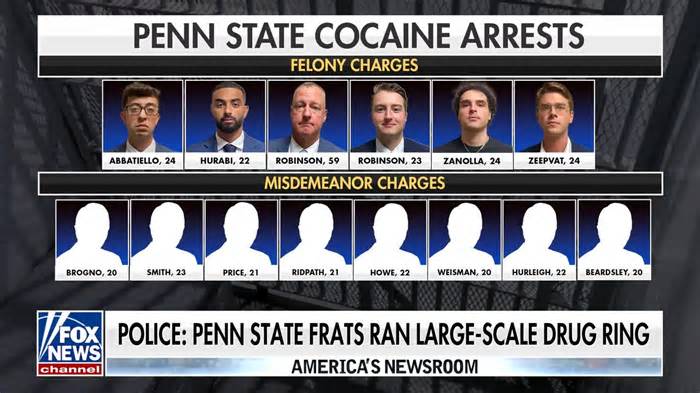
Pennsylvania authorities announced charges against 14 people connected to an alleged cocaine-trafficking operation involving current and former Penn State students and members of the Sigma Chi and Delta Upsilon fraternities. Thirteen defendants were current or former students; the fourteenth was the father of one of the accused.
According to the Pennsylvania Attorney General’s Office, senior fraternity members Agostino Abbatiello and Thomas Robinson allegedly occupied leading positions in an operation that obtained cocaine from New York and Philadelphia and distributed it throughout the Penn State student community.
The allegations go far beyond recreational possession.
Investigators allege that cocaine was transported in quantities ranging from hundreds of grams to approximately one kilogram. One kilogram purchase allegedly cost $22,000. Fraternity pledges were reportedly directed to cut and package cocaine into smaller bags for distribution. Witnesses described the packaging as a task assigned to pledges, effectively weaving an alleged drug enterprise into fraternity culture.
The criminal complaint alleges that Abbatiello was considered one of the largest cocaine distributors at Penn State during 2023 and 2024. One fraternity member reportedly said Abbatiello required him to make cocaine deliveries after he could not repay a $1,500 loan for a spring break trip. Another accused participant allegedly paid more than $50,000 in cash and electronic transactions for cocaine intended for distribution.
Robinson’s father, an attorney, was also charged after allegedly attempting to conceal evidence. The charges against the defendants range from misdemeanor possession offenses to felony allegations involving corrupt organizations, conspiracy, possession with intent to deliver and dealing in the proceeds of unlawful activity. These remain allegations, and every defendant is entitled to due process.
Penn State said it was “horrified” by the allegations, suspended Delta Upsilon and announced an internal review. Sigma Chi was described as operating outside the university’s official recognition.
The Penn State case has received legitimate national coverage from outlets including the Associated Press and ABC News. The concern is not that the story was completely ignored. The concern is the difference in framing.
Tuskegee’s policy was frequently presented as evidence of a broader cultural problem involving Black students and HBCUs. Images and headlines foregrounded bonnets, durags, Black faces and debates over proper behavior.
Penn State’s alleged trafficking ring, by contrast, has generally been framed as a criminal case involving particular students and fraternities. The university’s identity has been buffered from the conduct. Coverage often features photographs of Old Main, fraternity houses or individual defendants rather than using the allegations to question the values, culture or legitimacy of predominantly white institutions as a whole.
No serious commentator has asked whether white college culture is inherently criminal because fraternity pledges allegedly packaged cocaine. There has been no broad national demand that white students change how they dress, speak or socialize before they can be viewed as responsible citizens. Penn State students who had nothing to do with the alleged operation have not been called upon to answer collectively for it.
Black people and Black institutions are rarely afforded that same separation.
When wrongdoing occurs at an HBCU or within a Black community, the behavior is often treated as representative. It becomes a story about Black culture, Black leadership or collective moral failure. When misconduct occurs at a predominantly white institution, the institution is more often preserved while responsibility is assigned to particular individuals, organizations or “bad actors.”
That disparity is especially striking here. At Tuskegee, the national discussion centered on what students wore to class and the cafeteria. At Penn State, authorities describe an alleged organized cocaine-distribution network involving interstate suppliers, large cash transactions, fraternity initiation practices and efforts to conceal evidence.
One institution became the subject of a cultural indictment over appearance. The other became the location of an alleged criminal enterprise.
This does not mean Tuskegee’s policy should escape criticism. Students have every right to debate whether the university is preparing them for professional life or imposing respectability standards rooted in cultural bias. HBCUs must be able to examine their own policies honestly.
But Black institutions should also recognize the danger of accepting the premise that their students must constantly prove respectability to a society that does not apply the same collective burden to others.
A bonnet may violate a campus dress code. A durag may be considered inappropriate in a particular setting. Neither is evidence of criminality, intellectual weakness or moral failure.
An alleged cocaine-trafficking organization is another matter entirely.
The media’s responsibility is not merely to cover both stories. It is to examine whether the language, images and assumptions used in that coverage assign collective shame to Black institutions while extending individuality, context and institutional protection to their white counterparts.
The question is not whether Tuskegee students should dress professionally. The deeper question is why Black appearance so easily becomes a national crisis while far more consequential misconduct elsewhere is treated as an unfortunate exception.
Sources and Further Reading
Tuskegee University Student Handbook 2025–2026: https://www.tuskegee.edu/studenthandbook
Inside Higher Ed: Tuskegee University Dress Code Sparks Debate: https://www.insidehighered.com/news/institutions/minority-serving-institutions/2026/08/04/tuskegee-university-dress-code-sparks
Pennsylvania Attorney General: Charges Against 14 People in Penn State Cocaine Ring: https://www.attorneygeneral.gov/taking-action/ag-sunday-state-college-police-announce-charges-against-14-people-in-cocaine-trafficking-ring-involving-penn-state-u-students-fraternities/
Associated Press: Penn State Fraternity Cocaine-Trafficking Allegations: https://apnews.com/article/f78b51c445a680ffa260337e3500e5aa
ABC News: 14 Face Charges Related to Alleged Penn State Cocaine Ring: https://abcnews.com/US/14-face-charges-related-alleged-cocaine-ring-penn/story?id=135731396

