

By ARGUS EYE ON POLITICS
A Congressional Vote Exposes a Growing Democratic Divide—and a Leadership Test for Hakeem Jeffries
A significant congressional vote this week offered one of the clearest indications yet that the Democratic Party’s longstanding consensus around U.S. military support for Israel is undergoing substantial change.
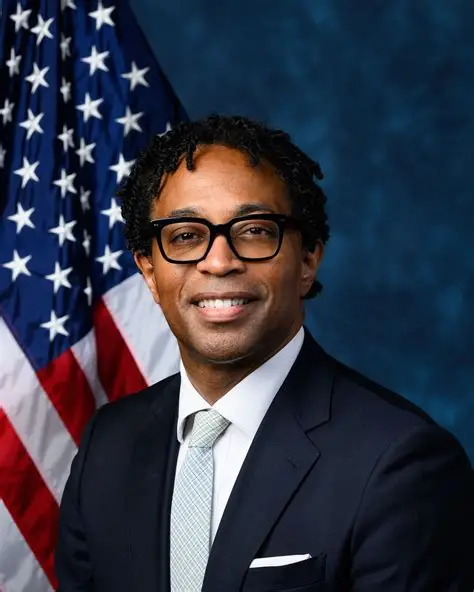
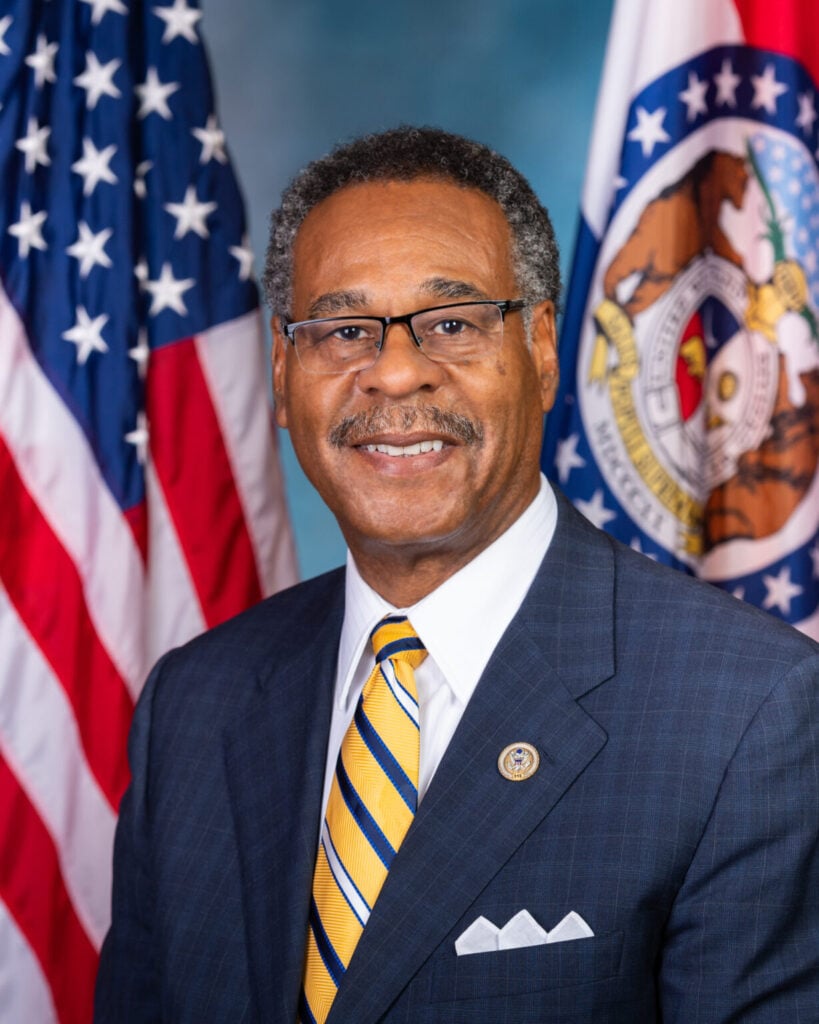
Missouri Democratic Reps. Wesley Bell and Emanuel Cleaver opposed an effort to eliminate approximately $3.3 billion in annual U.S. military assistance to Israel, placing the two Missouri congressmen on the opposite side of the question from a majority of House Democrats who voted for the amendment.
The vote is significant not simply because of the outcome—the amendment failed—but because it revealed how dramatically the political debate surrounding Israel has shifted within the Democratic caucus. What was once primarily a dispute between a relatively small group of progressive lawmakers and the party’s establishment has developed into a broader debate over whether U.S. military assistance to Israel should continue at current levels, be conditioned, be limited to defensive purposes, or be substantially reduced.
It is important, however, to characterize the vote precisely. The amendment was broader than proposals that would merely condition certain offensive weapons or restrict assistance based on specific Israeli government policies. Consequently, opposition to the amendment should not automatically be interpreted as support for every action of the Israeli government, just as support for the amendment should not automatically be characterized as opposition to Israel’s existence or security.
The Missouri Question: Bell, Bush and AIPAC
The vote carries particular political significance for Congressman Wesley Bell, who is facing former Congresswoman Cori Bush in a closely watched August 4 Democratic primary rematch in Missouri’s 1st Congressional District.
Israel and Gaza were major issues surrounding their first congressional contest in 2024. Bush emerged as one of Congress’s most outspoken critics of Israel’s military campaign in Gaza and called for a ceasefire, while Bell presented himself as a stronger supporter of the traditional U.S.-Israel relationship. Their differences became part of a broader national Democratic debate over Israel and U.S. foreign policy.
The 2024 race also became nationally notable because of the extraordinary level of outside spending. AIPAC’s affiliated super PAC, United Democracy Project, spent approximately $8.5 million opposing Bush as Bell ultimately defeated the incumbent. A similar dynamic occurred in New York, where United Democracy Project spent more than $13 million in the Democratic primary in which George Latimer defeated progressive Congressman Jamaal Bowman. Those contests helped establish Israel policy—and the role of pro-Israel political spending—as a significant fault line in Democratic primary politics.
That history now follows Bell into the 2026 rematch.
According to recent reporting, AIPAC’s United Democracy Project is again involved in the Missouri contest, with significant spending supporting Bell’s reelection effort. Bush, meanwhile, is attempting to turn the organization’s involvement into an issue itself, arguing that Democratic voters should question the influence of large outside expenditures in congressional primaries. Bell’s supporters can counter that pro-Israel organizations, like other political advocacy groups, have the legal right to support candidates whose policies align with their priorities.
The political significance extends beyond Bell and Bush. AIPAC describes its mission as strengthening the U.S.-Israel relationship and openly supports pro-Israel Democratic and Republican candidates. Its growing electoral activity, however, has made the organization an increasingly prominent participant in Democratic primary contests, particularly races involving progressive candidates critical of Israeli government policy.
For Bell, therefore, the latest Israel aid vote is likely to be viewed through two competing political lenses. Supporters may see his vote as consistent with a longstanding commitment to Israel’s security and the U.S.-Israel alliance. Critics, including some Bush supporters, may view it as further evidence that Bell remains aligned with the pro-Israel position championed by organizations that invested heavily in his initial election to Congress.
The Democratic Center of Gravity Is Moving
The larger question is whether congressional Democrats themselves are moving faster on Israel policy than some of their party’s leaders.
AIPAC’s political influence has increasingly become part of that debate. Since establishing its political operations, AIPAC and its affiliated groups have invested heavily in congressional elections. Associated Press reported earlier this year that AIPAC’s traditional PAC and United Democracy Project had spent more than $221 million since December 2021, with the super PAC concentrating much of its major spending in Democratic primaries. AIPAC maintains that its political involvement is intended to elect candidates committed to strengthening the U.S.-Israel alliance; critics argue that the scale of that spending can discourage Democratic candidates from challenging U.S. policy toward Israel.
This tension presents an increasingly difficult challenge for House Minority Leader Hakeem Jeffries if Democrats regain the House majority and he becomes the presumptive candidate for Speaker.
Jeffries would potentially lead a caucus in which a substantial number of members are demanding greater restrictions on military assistance to Israel while others remain committed to the traditional U.S.-Israel security relationship. He would also have to navigate growing disagreements over the political role of AIPAC and other outside organizations in Democratic primaries.
The Missouri primary could become part of that larger leadership equation. Bush recently declined to commit in advance to supporting Jeffries for Speaker if she returns to Congress, reflecting broader tensions between some progressive candidates and Democratic leadership.
The result is a political debate operating on several levels simultaneously: the future of U.S. military assistance to Israel, the humanitarian consequences of the Gaza conflict, Israel’s security, the influence of outside political spending in Democratic primaries, and ultimately the direction of the Democratic Party itself.
For Bell and Cleaver, the immediate question concerns how Missouri Democratic voters interpret their positions on Israel.
For Bell, the stakes are particularly immediate because those questions are now intertwined with a competitive primary against the congresswoman he defeated two years ago—with AIPAC and Israel policy once again occupying a prominent place in the contest.
For Jeffries, the challenge is considerably broader. If Democrats regain control of the House, he may inherit a caucus in which the old consensus on Israel can no longer be taken for granted. His ability to reconcile those divisions—while maintaining enough unity to govern a potentially narrow House majority—could become one of the defining tests of a future speakership.

