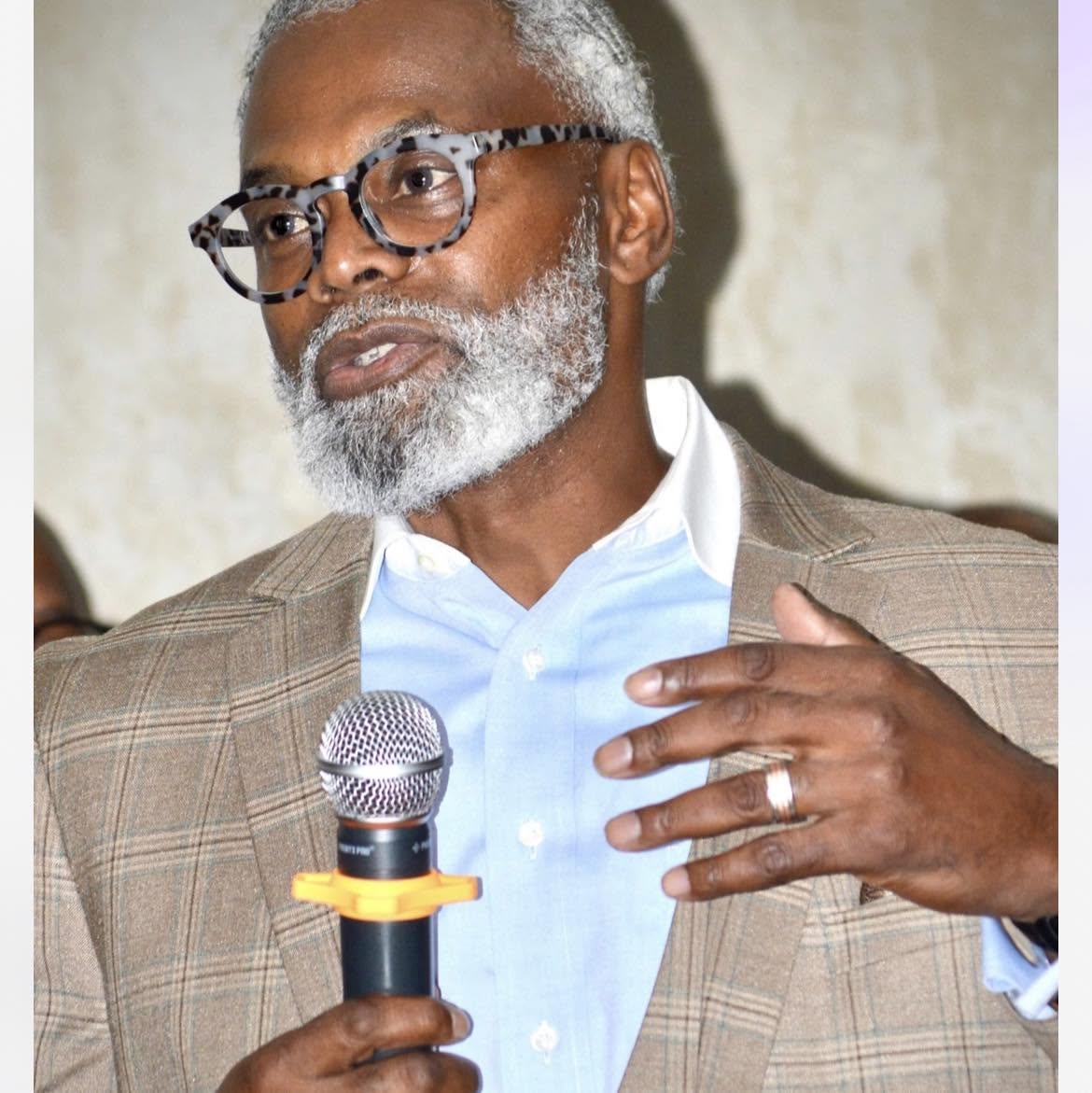

By Talibdin “TD” El-Amin
Democrats are approaching the 2026 midterm elections with something they did not have two years ago: a genuine opportunity to reclaim power in Washington. Current political conditions favor them to retake the House, while control of the Senate is increasingly competitive rather than out of reach. Recent predictionmarket estimates cited by MarketWatch put the probability of Democrats capturing both chambers at roughly 48 percent, with another 38 percent chance that Democrats win the House while Republicans retain the Senate.
But winning an election and deciding who should lead afterward are two different questions. If Democrats take the House, Minority Leader Hakeem Jeffries of New York would naturally be the favorite to become Speaker. If Democrats somehow capture the Senate, Chuck Schumer would similarly stand in position to return to majority leadership.
Neither should be treated as a foregone conclusion.
Leadership should not be inherited because someone has waited his turn. A Democratic victory in November should trigger a serious debate about what kind of Democratic Party voters actually voted to put into power.
That debate is overdue.
The Autopsy Democrats Should Actually Read The Democratic Party commissioned a lengthy autopsy of its disastrous 2024 presidential election, eventually releasing the 192-page report in May after initially withholding it. Even then, the DNC distanced itself from its own commissioned product. The report nevertheless described a party suffering from a “persistent inability or unwillingness to listen to all voters” and identified significant erosion among men, non-college voters, irregular voters and rural Americans.
Perhaps more revealing was what the autopsy failed to confront.
It largely avoided President Biden’s age and the circumstances surrounding his late withdrawal, and it failed to seriously examine Gaza and the political consequences of the Democratic establishment’s support for Israel’s war.
That omission illustrates the larger problem.
You cannot repair a political party by studying everything except the subjects that make party leaders uncomfortable.
The Democratic establishment remains extraordinarily skilled at discussing campaign mechanics, messaging, turnout models, advertising, demographics and fundraising—while sometimes avoiding the deeper question:
What does the Democratic Party actually stand for when standing for it carries a political cost?
That question should also be asked of Hakeem Jeffries.
Jeffries and a Democratic Electorate That Is Moving
Jeffries represents the institutional Democratic Party extremely well. That is precisely my concern.
On Israel, particularly, he has remained firmly within the traditional Democratic establishment. He continues to emphasize Israel’s right to exist as a Jewish and democratic state while also advocating Palestinian self-determination and a two-state solution.
But the electorate beneath Democratic leadership has moved dramatically.
A May 2026 Pew survey found that only 16 percent of Democrats and Democratic-leaning voters held a favorable view of the Israeli government, compared with 67 percent who viewed the Palestinian people favorably. Among Democrats under 30, 72 percent viewed Palestinians favorably compared with only 26 percent who viewed Israelis favorably.
This is no longer a fringe disagreement.
Reuters recently described American support for Israel as increasingly fracturing along partisan and generational lines and reported that nearly half of House Democrats supported an effort to cut military assistance to Israel.
One can support Israel’s existence, condemn Hamas, defend Jewish Americans against antisemitism, support Palestinian human rights and still question whether American taxpayers should provide virtually unconditional support to an Israeli government whose conduct has produced enormous international condemnation.
That conversation is happening among Democratic voters whether Democratic leadership wants it or not.
The Insurgency Is Telling Democrats Something
Look at the ballot box.
The success of democratic socialist and insurgent progressive candidates does not necessarily mean America—or even the entire Democratic Party—is becoming socialist.
It means something potentially more important:
Voters are becoming impatient with establishment politics.
In New York this summer, three candidates backed by Mayor Zohran Mamdani swept Democratic congressional primaries, with two defeating sitting members of Congress.
The trend extends beyond New York. Recent Democratic primaries have produced significant victories for younger and anti-establishment candidates, although progressives have also suffered losses. The emerging message appears less ideological than institutional: Democratic voters want change.
That should matter when Democrats select congressional leadership.
Then There Is Healthcare
Jeffries recently provided another example of the problem when questioned about Medicare for All.
Rather than firmly embracing the policy, he emphasized repairing America’s existing healthcare system. That answer generated immediate criticism from progressives, particularly because Jeffries himself previously co-sponsored Medicare-for-All legislation.
The polling deserves precision.
I could not substantiate the claim that 75 percent of all Americans currently support Medicare for All. They do not. But support within the Democratic base is substantial. A November 2025 GQR survey commissioned by the Medicare for All advocacy campaign reported 90 percent support among Democrats, while finding 54 percent support among voters overall. Because that survey was commissioned by an advocacy organization, its numbers should be treated accordingly. Older independent KFF polling also found 77 percent of Democrats supporting Medicare for All, although support changes considerably depending upon how the proposal and its tradeoffs are described.
So the larger question remains legitimate.
When Democratic voters are demanding fundamental healthcare reform, why does Democratic leadership so often sound uncertain about policies its own voters strongly support? And voters are entitled to ask another uncomfortable question: Who benefits from that hesitation?
Patients?
Workers?
Or the enormously powerful insurance and pharmaceutical industries that have spent decades influencing Washington?
Leadership Cannot Simply Mean Seniority
My criticism is not personal toward Jeffries or Schumer. It is political.
I am past talking points, partisan platitudes and carefully tested phrases designed to offend nobody while committing to almost nothing.
America is dealing with healthcare costs, housing affordability, concentrated corporate power, economic inequality, war, immigration, declining confidence in government and a working class increasingly skeptical that either political party represents its economic interests
Those conditions demand more than competent parliamentary management. They demand substantive, courageous and bold leadership.
I have yet to see enough from Hakeem Jeffries to convince me that he represents the transformative leadership this moment requires. Too often, I hear the language of the existing Democratic establishment rather than an independent political vision capable of challenging it.
I have similar concerns about Chuck Schumer. That does not mean either man should automatically be rejected.
It means they should be challenged.
If Democrats win the House, there should be serious competition for Speaker. Candidates should publicly explain what they intend to do about healthcare, housing, wages, corporate influence, Gaza and Israel, immigration, voting rights, campaign finance and the economic insecurity affecting working families.
If Democrats capture the Senate, the same conversation should occur over Senate leadership. Make them earn it.
The Democratic Party’s own 2024 autopsy essentially warned that the party had stopped listening to significant portions of the electorate. Winning the 2026 midterms because voters are dissatisfied with Republicans would not magically erase that problem.
In fact, mistaking rejection of Republicans for unconditional approval of Democratic leadership may be the fastest way to repeat it.
The question after November should therefore not simply be: Will Hakeem Jeffries become Speaker?
It should be What kind of Speaker—and what kind of Democratic Party—does this moment require?
Those are very different questions.
And if Democrats are serious about learning anything from 2024, they should finally have the courage to debate the answer.